NYLON/POLYAMIDE (PA)
Nylons are tough, rigid and have good heat resistance but all absorb water. There is a wide range of different grades identified by a numerical suffix, i.e. 6,66,11,12,4.6. Although the basic structure of the materials is similar the properties vary from grade to grade.
Please Note: This page is for information purposes only. Rutland Plastics is an Injection Moulder and does not supply polymers.
PROPERTIES
The most common grades are PA6 and PA66 so we shall concentrate on them. PA6 is slightly lighter in colour than PA66, has a higher impact strength and slightly better low temperature properties. It also has a better resistance to solvents, grease and detergents but a poorer resistance to dilute mineral acids. PA6 absorbs more water than PA66 (PA11 and PA12 have much lower water absorption) after moulding which causes swelling and an increase in toughness but this does affect dimensional tolerances. Nylons have very good dielectric properties and good flame retardance. The addition of fillers, such as glass fibres, is common with nylon in order to improve strength and stiffness.
COLOURING
The natural colour of the material ranges from translucent white to translucent brown. A wide colour range is possible but colouring is difficult due to the high processing temperatures so polymer specific or high temperature masterbatches are required.
Finishing
Nylons can be readily machined. Mouldings can be decorated by plating, painting, vacuum metallization, hot foil stamping, silk screen printing and laser printing. Components can be joined by using a two part epoxy adhesive and ultrasonic welding may also be used.
CHEMICAL RESISTANCE
| Mineral Acids (dilute) | Fair |
| Mineral Acids (concentrated) | Poor |
| Alkali | Excellent |
| Alcohol | Good |
| Ketone | Poor |
| Aromatic Hydrocarbon | Poor |
| Chlorinated Hydrocarbon | Poor |
| Detergents | Excellent |
| Oils, Greases | Good |
NYLON USE
| PA6 | PA66 | Other | Total | |
| Automotive | 22.5% | 28.1% | 44.0% | 29.3% |
| Electrical/Electronic | 7.3% | 23.4% | 5.0% | 13.7% |
| Domestic Appliances | 7.5% | 9.2% | 8.0% | 8.3% |
| Industrial | 5.9% | 9.4% | 7.0% | 7.6% |
| Sport/Leisure | 5.8% | 5.6% | 6.0% | 5.8% |
| Business Machines | 2.1% | 2.4% | 2.0% | 2.2% |
| Other | 48.9% | 21.9% | 28.0% | 33.0% |
APPLICATIONS
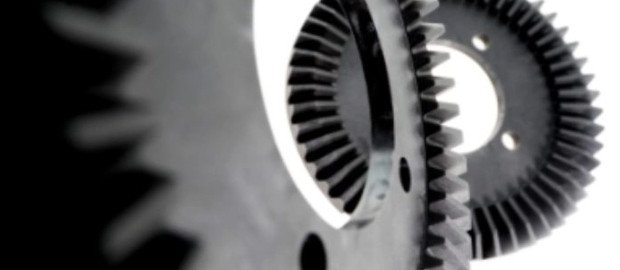
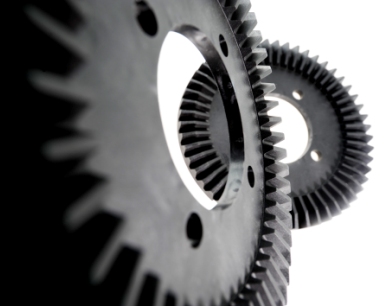
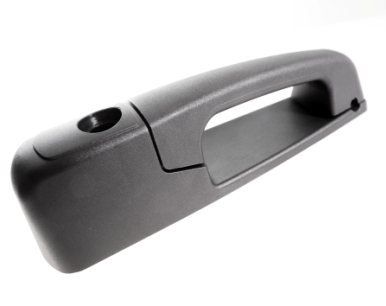
As an engineering material, nylon is frequently used in components such as gears and bearings. Glass filled grades may be used as power tool housings. PA66 is widely used by the automotive industry for components such as fans, door handles and filters. Around the home nylons can be found in kitchen appliance housings and vacuum cleaner components.
PA11 and PA12 are also used for gears in meters, etc where greater dimensional stability may be required. As they maintain flexibility and low friction over a wider range of temperatures than PA6 and PA66, they tend to be used in products where this is more important, such as cable ties and battery cases for aircraft. Sports equipment can also be manufactured using PA11 and PA12, for example shuttlecocks and racquet frames using carbon filled grades.