POLYPROPYLENE
Polypropylene is a member of the polyolefin family which also includes polyethylene. This group of materials is the most widely used accounting for over half of worldwide thermoplastic consumption.
Generally speaking they are regarded as commodity polymers, that is to say that they are used for everyday products. However, the addition of glass fibres, for example, makes them suited also to engineering related products therefore becoming an engineering polymer in the process.
Please Note: This page is for information purposes only. Rutland Plastics is an Injection Moulder and does not supply polymers.
PROPERTIES
Polypropylenes’ general properties make them attractive for a wide range of applications – they have strength, lightness, flexibility, stability and are easily processed. They are also well suited to recycling which is an important consideration in today’s environment conscious world.
Polypropylenes are available either as homopolymers or block co-polymers. Homopolymers are high strength and stiff but become brittle at low temperatures. Block co-polymers have ethylene blended in to improve the low temperature performance. However, they have less clarity and gloss. The higher the ethylene content the softer and tougher the material becomes. There are also random copolymers that have a lower ethylene content and a slightly different chemical structure, these may be chosen when a lower melting point, greater flexibility or enhanced clarity may be required.
The properties of polypropylene can be altered by the addition of fillers, the most common being talc or glass fibres.
The addition of talc provides improved rigidity but results in lower impact strength and reduced resistance to long term heat ageing.
Glass fibres provide good rigidity, improved impact resistance, a good resistance to creep and better environmental stress cracking resistance.
COLOURING
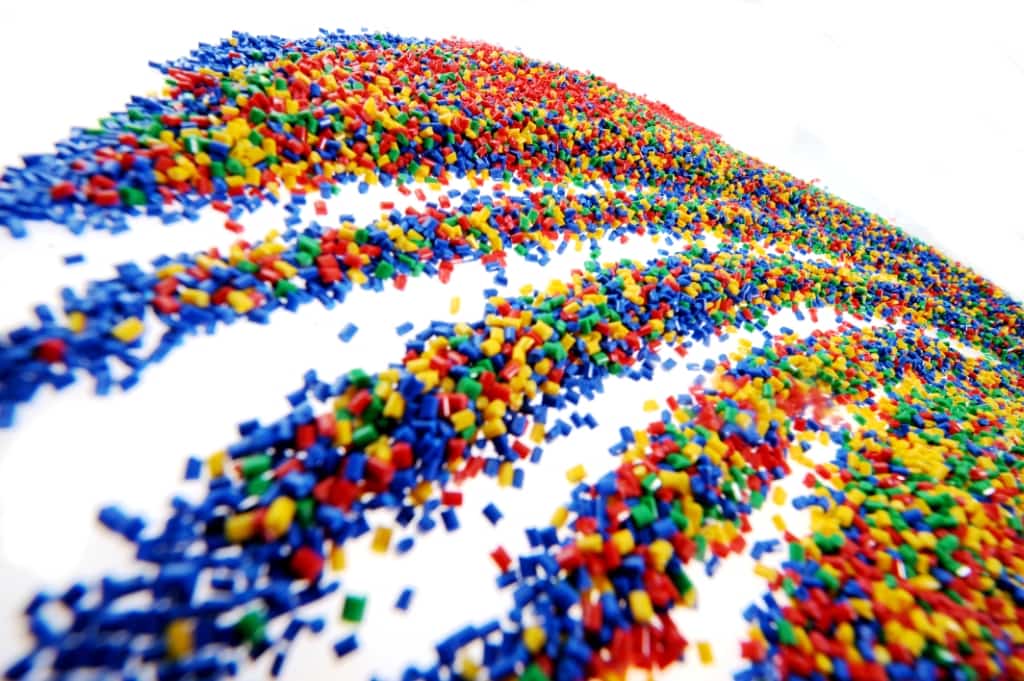
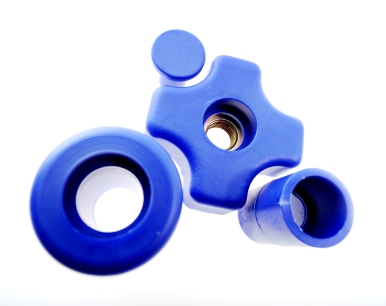
Polypropylenes are translucent white in their natural condition and are therefore easy to colour and a wide range of options are therefore available. Transparent mouldings are not generally possible with polypropylene although there are some grades with a higher degree of clarity but other performance criteria may not be so good. If the material is to be used for an outdoors application then UV stabilisers will need to be added as colours will fade and the material become brittle over time.
Finishing
Polypropylene is not generally suited to painting although the surface may be treated to aid the adhesion of paint. There are adhesives available to make gluing of polypropylene moulding possible. Mouldings may also be machined if required.
CHEMICAL RESISTANCE
| Mineral Acids (dilute) | Excellent |
| Mineral Acids (concentrated) | Excellent |
| Alkali | Excellent |
| Alcohol | Excellent |
| Ketone | Fair |
| Aromatic Hydrocarbon | Fair |
| Chlorinated Hydrocarbon | Fair |
| Detergents | Fair |
| Oils, Greases | Good |
POLYPROPYLENE USE
| Fibres | 28.2% |
| Films | 17.9% |
| Automotive | 11.9% |
| Packaging | 10.6% |
| Furniture | 8.4% |
| Appliances | 6.9% |
| Electronics | 4.4% |
| Tubes/Sheets | 1.4% |
| Thermoforming | 1.3% |
| Blow Moulding | 1.1% |
APPLICATIONS
There is a wide range of applications for polypropylene ranging from crates and bins, through housewares, washing machine drums and plumbing fittings, to automotive applications such as bumpers and dashboards. The material is frequently used for kettle bodies as mouldings can withstand boiling water and steam sterilisation and a high gloss, scratch resistant surface finish is possible. Because of its inherent flexibility it is ideally suited to integral hinges.