



What Is the Difference Between Injection Moulding and 3D Printing?
A practical comparison for teams deciding between rapid prototyping, low-volume production and full-scale injection moulding.
3D printing is usually best for prototypes, design testing, jigs and low-volume parts, while injection moulding is usually best for repeatable production at scale. Injection moulding requires a mould tool, but it can deliver lower unit costs and more consistent parts when volumes rise.
Introduction
A practical comparison for teams deciding between rapid prototyping, low-volume production and full-scale injection moulding.
Two different manufacturing routes
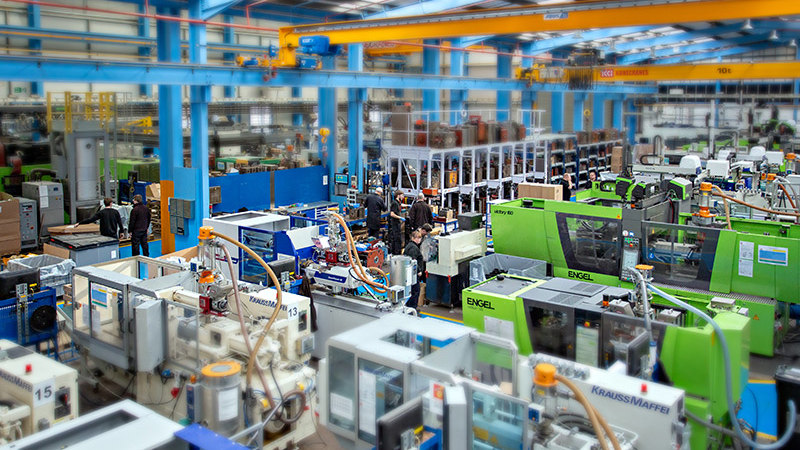
Injection moulding and 3D printing both make plastic parts, but they solve different problems. 3D printing builds parts layer by layer from digital data, making it useful for prototypes, design checks, jigs, fixtures and low-volume parts. Injection moulding uses a mould tool and molten thermoplastic to produce repeatable parts at scale.
When 3D printing is the better starting point
3D printing is useful when a design is still changing or when a team needs to test fit, form and function before investing in tooling. It can be faster and more flexible for early-stage development. Rutland Plastics uses 3D printing for customer prototypes as well as end-of-arm tooling, jigs and fixtures used in manufacturing.
When injection moulding becomes stronger
Injection moulding becomes stronger when the product needs repeatability, defined materials, consistent surface finish and production volume. The mould tool is an upfront investment, but once approved it can produce repeat parts efficiently. It is also better suited to many production-grade materials and quality-controlled manufacturing processes.
Cost and performance differences
For one-off prototypes, 3D printing can avoid tooling cost. For thousands of parts, injection moulding often becomes more economical because the tool cost is spread across production volume. Injection moulded parts may also deliver better production consistency and material performance for many applications.
Using both methods together
The best route is often not one or the other. A product can be 3D printed first for testing, refined through design for manufacture, and then moved into injection moulding when the design and business case are ready. Rutland Plastics supports both prototyping and production so customers can move from concept to moulded components with fewer handover risks.
Choose the right route before investing in tooling
Rutland Plastics can help compare prototype, tooling and production options based on your design, volume and application requirements.
FAQs – Injection Moulding vs 3D Printing
For one-offs and prototypes, often yes. For repeat production, injection moulding usually becomes more cost-effective.
Sometimes for prototypes or low-volume uses, but production mouldings may offer better repeatability and material consistency.
Often yes. Prototyping can test fit, form and function before tool investment.
Yes. Rutland Plastics offers 3D printing, prototyping, design support, tooling and injection moulding.
When the design is stable, production volume is increasing and consistent manufacturing quality is required.
