



How Much Does Injection Moulding Cost in the UK?
A practical cost guide for businesses planning plastic injection moulding, tooling and long-term component production in the UK.
Why there is no single fixed price
Injection moulding is not priced like a standard catalogue product. Each component has its own design, material, size, tolerance, surface finish, tooling requirement and production quantity. A small simple part made in a common polymer will cost very differently from a large technical moulding, a medical component or a multi-part assembly requiring secondary operations.
The two main cost areas
Most projects have two clear cost areas: the mould tool and the ongoing production run. Tooling covers the design and manufacture of the mould that forms the plastic part. Production covers material, machine time, labour, quality checks, finishing, packaging and logistics. A well-designed mould tool can reduce waste, cycle time and long-term cost per part, so the cheapest tool is not always the best commercial option.
What affects tooling cost
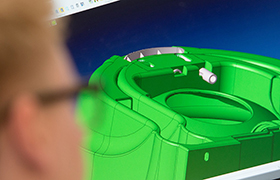
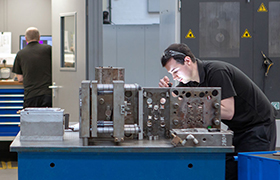
Tooling cost is influenced by the size of the part, complexity of geometry, number of cavities, steel grade, surface finish, slide actions, inserts, cooling design and expected production life. Parts with tight tolerances, complex undercuts or demanding surface finishes require more detailed tool engineering. Tool design also affects product quality, because poor cooling, feed or venting can lead to avoidable production problems.
What affects production cost
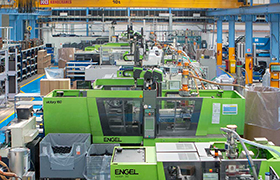
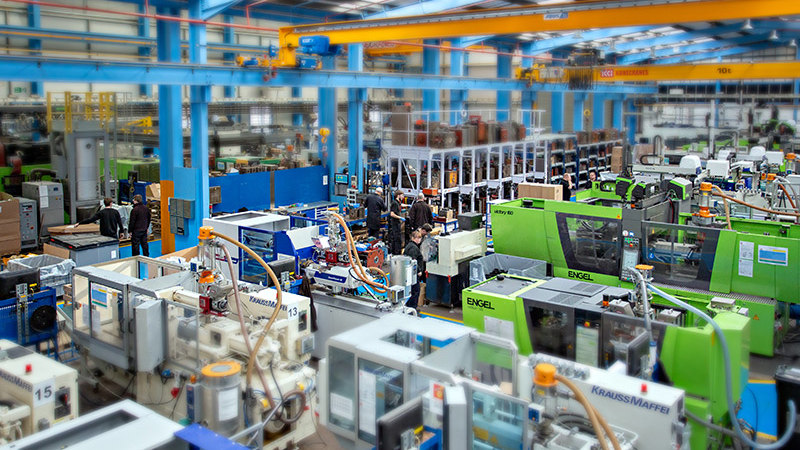
Production cost is affected by material price, shot weight, cycle time, machine tonnage, scrap rate, quality checks and any additional services. Parts needing machining, finishing, sonic welding, assembly, hot foil printing or specialist packaging will have extra process steps. Annual volume matters because machine setup and tooling investment are spread across the number of parts produced.
How Rutland Plastics helps control cost
Rutland Plastics supports customers before production by reviewing design, material choice and manufacturability. Early technical input can reduce tooling changes, improve cycle efficiency and help avoid expensive delays. For an accurate price, the team will need drawings, CAD data, expected volumes, material requirements, quality standards and details of any assembly or finishing work.
Get a costed view of tooling and production
Send your CAD files, drawings, material requirements or sample parts and Rutland Plastics will help you understand the right route to production.
FAQs – Mould Tool Design and Product Quality
It depends on part size, complexity, cavities, tool life and tolerance requirements. A project-specific quote is needed for accuracy.
Material, shot weight, machine time, cycle time, finishing, quality checks and production volume all affect cost per part.
For very small runs, 3D printing or prototype tooling may be more suitable. Injection moulding is usually stronger for repeat production.
Yes. CAD files, drawings and sample parts can help the team assess tooling and production requirements.
Cost can often be reduced through design for manufacture, material review, efficient tooling, sensible tolerances and planned production volumes.
