



Can Large Plastic Parts Be Made With Injection Moulding?
A capability-led guide for manufacturers needing large, thick-section or technically demanding plastic mouldings.
Yes, large plastic parts can be made with injection moulding when the moulder has suitable machine capacity, tooling knowledge, cooling design, material expertise and handling processes. Rutland Plastics can produce mouldings up to 48kg and 1.5m, including complex large parts and thick-section mouldings.
Introduction
A capability-led guide for manufacturers needing large, thick-section or technically demanding plastic mouldings.
Yes, but capability matters
Large plastic parts can be injection moulded, but not every moulder has the machine capacity, tooling knowledge or handling processes required. Large parts need careful planning because size, weight, wall thickness and cooling behaviour all affect production quality.
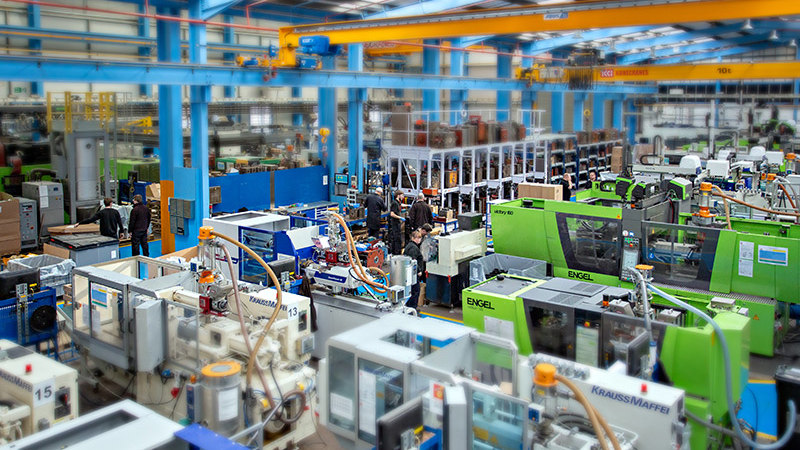
Rutland Plastics large-part capability
Rutland Plastics can manufacture plastic parts from 1g to 48kg and up to 1.5m in size. The company also has experience in thick-section moulding, in some cases over 100mm, which is important for technically demanding or structural applications.
Design factors for large mouldings
Large moulded parts need appropriate wall thickness, ribs, radii, draft angles, gate positions and cooling design. Poorly planned geometry can create sink marks, warpage, internal stress or long cycle times. Design for manufacture should happen before tooling begins.
Tooling and machine considerations
The tool must be designed for flow, cooling, ejection, handling and production life. Machine tonnage, shot capacity and clamp requirements must match the component. Large tools also require careful sampling and validation.
Additional operations and logistics
Large moulded parts may need machining, assembly, finishing, packaging or storage. Rutland Plastics offers additional services and warehouse support, which can simplify the route from moulding to delivery.
Manufacture larger plastic parts with a capable UK moulder
Rutland Plastics can mould parts from 1g to 48kg and up to 1.5m, with thick-section moulding experience over 100mm in some cases.
FAQs – Large Plastic Parts in Injection Moulding
A large part is usually one requiring high machine capacity, heavy tooling, complex handling or specialist cooling design.
Rutland Plastics can mould parts up to 48kg and up to 1.5m.
Yes. Rutland Plastics has thick-section moulding experience, in some cases over 100mm.
They often do because they require more material, larger tools, longer cycles and greater handling capacity.
Yes. Additional services can include assembly and secondary operations.
