



How Does Mould Tool Design Affect Product Quality?
A tool-focused guide to why mould tool design is critical for consistent injection moulded parts.
Mould tool design affects product quality because it controls how plastic fills, cools, shrinks and ejects from the mould. Gate position, cooling channels, venting, parting lines, cavity layout and tool accuracy all influence consistency, finish, dimensions and defect risk.
Introduction
A tool-focused guide to why mould tool design is critical for consistent injection moulded parts.
The tool controls the result
The mould tool defines the part shape, surface, filling pattern, cooling and ejection. Even a strong material and good machine cannot fully compensate for poor tool design.
Filling and gate design
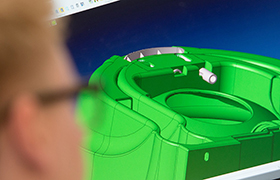
Gate position, runner design and flow path affect how plastic fills the cavity. Poor filling can create weld lines, air traps, short shots or inconsistent appearance. Moldflow insight can help identify risks before the tool is built.
Cooling and dimensional stability
Cooling has a major effect on cycle time, shrinkage and warpage. Uneven cooling can create distortion or internal stress. A well-planned cooling system supports better repeatability and cost-effective production.
Ejection and surface finish
Ejection must remove the part without damage, marks or distortion. Parting lines, shut-offs, vents and surface finish decisions all influence the appearance and function of the finished component.
Sampling proves the tool
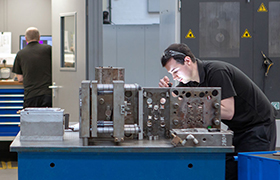
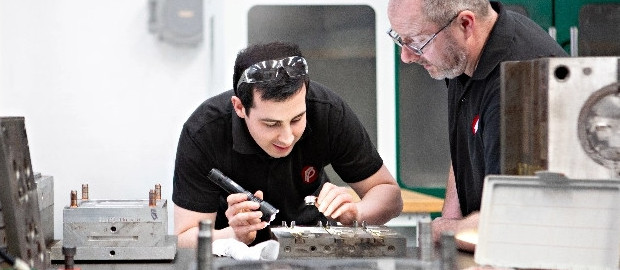
Tool trials and sampling confirm whether the mould produces parts to the required standard. Rutland Plastics can support tool specification, sampling, measurement and production readiness as part of a controlled manufacturing route.
Build quality into the tool, not just inspection
Rutland Plastics can advise on tool specification, mouldflow, sampling and production readiness for consistent moulded parts.
FAQs – Mould Tool Design and Product Quality
Because the tool controls filling, cooling, ejection, surface finish and dimensional consistency.
A gate is the entry point where molten plastic flows into the mould cavity.
Yes. Uneven cooling can cause warpage, shrinkage issues and longer cycle times.
Tool sampling tests early mouldings to confirm quality before production approval.
Yes. Rutland Plastics can support tool specification, mouldflow, sampling and production readiness.
