



How Long Does It Take to Make an Injection Mould Tool?
A clear guide to mould tool timescales, from design review and tool specification to sampling, validation and production readiness.
Injection mould tool lead time depends on part complexity, tool size, cavity count, material, tolerances, approval process and sampling requirements. Simple tools can be faster, while large, complex or high-volume tools need more design, manufacture, testing and validation time.
Introduction
A clear guide to mould tool timescales, from design review and tool specification to sampling, validation and production readiness.
Why tooling lead time varies
There is no single fixed lead time for every injection mould tool because each part has different geometry, size, material, tolerance and production requirements. A simple single-cavity tool may move faster than a large, complex tool with slides, inserts, hot runners or multiple cavities. Tool life expectations and quality requirements also affect the design and manufacturing process.
What happens before the tool is made
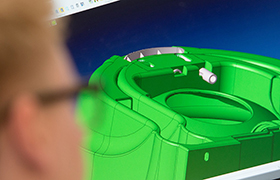
Before cutting steel, the part design should be reviewed for manufacturability. This includes wall thickness, draft angles, ribs, gates, parting lines, material choice and potential sink or warpage risks. Early design review can prevent expensive tooling changes later. Rutland Plastics can support this stage with technical input, CAD review, Moldex3D simulation and prototype learning where appropriate.
What happens during tool build
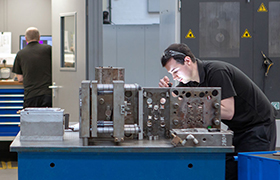
The toolmaker manufactures the mould tool according to the agreed specification. This may include machining, polishing, heat treatment, assembly, cooling design and tool trials. The more demanding the part, the more important it is to build the tool around stable production rather than only part shape.
Sampling and proving the tool
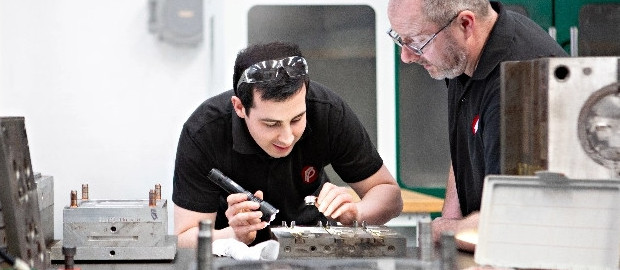
After the tool is built, trial mouldings are produced and checked. Sampling helps verify dimensions, surface finish, function, cycle time and material behaviour. Adjustments may be needed before production approval. For regulated or technically demanding parts, extra validation, documentation or customer approval stages may be required.
Planning with Rutland Plastics
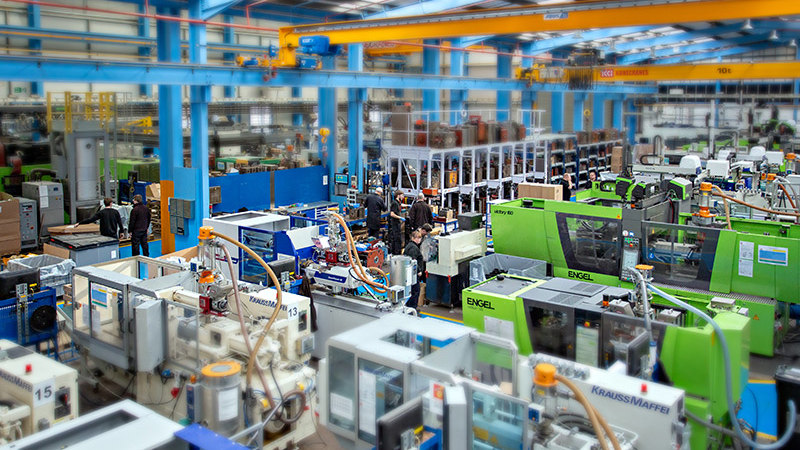
Rutland Plastics helps customers plan tooling as part of the wider manufacturing route. The team can advise whether prototype tooling, production tooling, multi-cavity tooling or tool transfer support is most suitable for the project. The right plan reduces risk and avoids unrealistic launch expectations.
Plan tooling timescales before production pressure builds
Share your drawings, CAD files, annual volumes and quality requirements so Rutland Plastics can advise on the right tooling route.
FAQs – Injection Mould Timelines
Part size, complexity, material, cavity count, tool features, approval stages and sampling requirements all affect lead time.
It is best to complete design for manufacture first. Starting too early can lead to tool changes and extra cost.
Tool sampling is the first trial production run used to check whether the tool produces parts to the required standard.
Yes. Rutland Plastics can support customers who already have a mould tool and need UK production support.
A good tool improves part quality, production reliability, cycle time and long-term cost per part.
