



What Is Design for Injection Moulding?
A clear DFM guide for teams designing plastic parts for reliable injection moulding production.
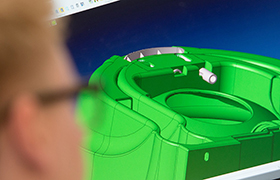
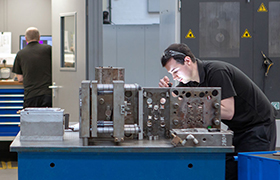
Design for injection moulding means designing a plastic part so it can be moulded efficiently, consistently and economically. It considers wall thickness, draft, ribs, bosses, material flow, shrinkage, parting lines, gates, cooling and tooling before production starts.
Introduction
A clear DFM guide for teams designing plastic parts for reliable injection moulding production.
Design for moulding, not just appearance
A plastic part may look correct in CAD but still be difficult or expensive to mould. Design for injection moulding makes sure the part can be produced consistently, with sensible tooling, stable material flow and realistic tolerances.
Key DFM considerations
Wall thickness, draft angles, ribs, bosses, undercuts, parting lines, gate positions, shrinkage, cooling and ejection all matter. Small design choices can affect cycle time, defect risk and tool cost.
Material and tool design together
Material behaviour influences shrinkage, flow, cooling and strength. Tool design must match the chosen polymer and part geometry. Rutland Plastics uses technical expertise and Moldex3D simulation to support cost-effective, reliable mould designs.
Prototype before committing where useful
Prototyping can help test form, fit and function before tooling. Rutland Plastics has in-house 3D printing and prototyping capability, helping customers learn from physical parts before production investment.
DFM reduces long-term cost
Good DFM can reduce tool modifications, shorten development cycles, improve cycle time and support better quality. It is most valuable before tooling begins, when changes are easier and less expensive.
Get the design right before tooling begins
Rutland Plastics can review CAD models, material choices, wall thickness, ribs, draft, tooling and mouldflow before production.
FAQs – Design for Injection Moulding
DFM means designing a part so it can be moulded efficiently, consistently and economically.
Before tooling begins, when design changes are easier and less costly.
Wall thickness, draft, ribs, bosses, gates, parting lines, cooling, material flow and ejection.
Yes. It can reduce tooling changes, defects, cycle time and material waste.
Yes. Rutland Plastics offers design for manufacture and Moldex3D support.
