



What Is Injection Moulding and How Does It Work?
A clear guide to the plastic injection moulding process, written for product teams, engineers and buyers planning reliable UK production.
Injection moulding is a manufacturing process where thermoplastic material is melted, injected into a precision mould tool, cooled and ejected as a finished plastic part. It is widely used because it can produce repeatable, accurate components at scale once the mould tool has been made.
Injection moulding in plain English
Plastic injection moulding turns polymer pellets into finished components by heating the material until it flows, injecting it under pressure into a mould tool, cooling it into shape and then ejecting the finished part. The mould tool controls the geometry, surface finish and repeatability of the part, which is why tooling design is so important. Once the tool is proven, the same process can produce thousands or millions of consistent parts with controlled quality.
How the process works step by step
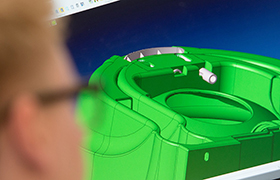
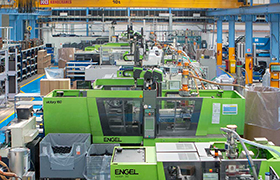
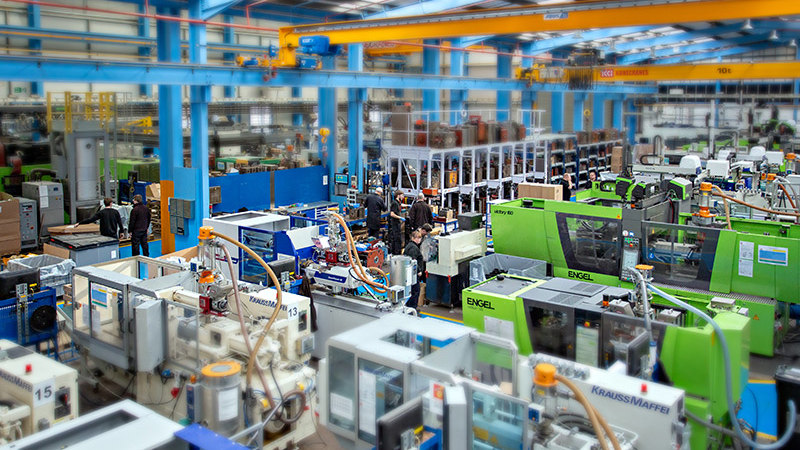
A typical project starts with part design, material selection and design for manufacture. A mould tool is then designed around the part, the material and the required production volume. During production, the selected thermoplastic is dried if required, fed into the moulding machine, melted in the barrel and injected into the mould cavity. The part cools inside the tool before it is ejected, inspected and packed or sent for secondary operations such as machining, finishing, sonic welding or assembly.
Why the mould tool matters
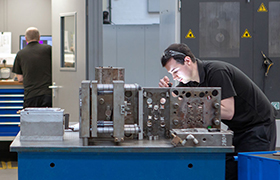
The mould tool is the heart of the process. A well-designed tool supports stable cycle times, better surface finish, fewer defects and lower long-term cost per part. Poorly planned tools can create problems such as sink marks, warpage, flash, poor filling or inconsistent dimensions. Rutland Plastics supports customers with design for manufacture, mouldflow insight, tooling specification and production planning so problems are addressed before production begins.
Where injection moulding is used
Injection moulding is used across medical devices, construction products, automotive components, electrical housings, consumer goods, industrial parts and technical assemblies. It is especially suitable when parts need repeatability, strength, dimensional consistency and scalable production. It can also support filled materials, colour masterbatches, reprocessed plastics, additives, insert moulding and outsert moulding where the application requires it.
Why work with Rutland Plastics
Rutland Plastics combines more than 70 years of experience with UK-based design, tooling, moulding, quality assurance and project management. The company can support early-stage ideas, existing mould tools and extra capacity requirements, helping customers reduce risk and bring plastic products into production with a practical, technically informed approach.
Turn an idea, drawing or existing mould tool into production-ready parts
Speak to Rutland Plastics about design, tooling, moulding and production support for your next plastic component project.
FAQs – Injection Moulding Basics
Injection moulding is a process where molten thermoplastic is injected into a mould tool, cooled and removed as a finished part.
Yes. It is usually most cost-effective when the same part is required repeatedly at medium or high volume.
Part design, material selection, tool design, machine settings, cooling, quality control and production consistency all affect part quality.
Yes. Rutland Plastics can manufacture parts from 1g to 48kg and up to 1.5m in size.
Yes. The team can support design for manufacture, Moldex3D simulation, prototyping and tooling specification before production.
