



What Quality Standards Apply to Injection Moulded Parts in the UK?
A quality-focused guide for buyers who need consistent, traceable and compliant injection moulded plastic components.
Quality standards for injection moulded parts can include ISO 9001 for quality management, ISO 13485 for medical device-related manufacturing and ISO 14001 for environmental management. Buyers may also require inspection plans, traceability, material records and dimensional checks.
Introduction
A quality-focused guide for buyers who need consistent, traceable and compliant injection moulded plastic components.
Quality standards depend on use
Not every part needs the same level of documentation, but every technical project benefits from a controlled approach. Some components only need basic dimensional checks, while medical or safety-related parts may need stronger traceability and documented inspection.

ISO systems at Rutland Plastics
Rutland Plastics holds ISO 9001:2015 for quality management, ISO 13485:2016 for medical device-related manufacturing activities and ISO 14001:2015 for environmental management. These standards support confidence in process control and continuous improvement.
Traceability and inspection
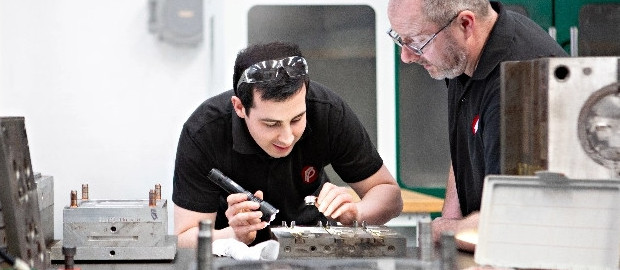
The company uses ERP traceability across operations and quality equipment including calibrated measuring tools, CMM and optical measurement. This supports checks on material batches, machine history, production data and inspection results.
Design and tool quality
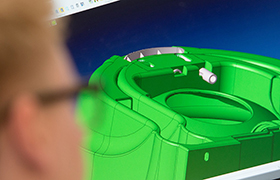
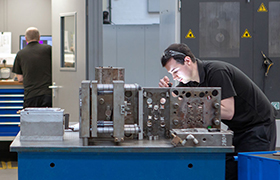
Quality does not begin at final inspection. It starts with design for manufacture, material selection and tool specification. A well-designed mould tool reduces defects and supports repeatable production.
Matching quality to the project
For each project, quality requirements should be agreed clearly. This may include tolerances, inspection frequency, certificates, PPAP-style evidence, medical documentation or customer-specific requirements depending on the sector.
Build inspection and traceability into production
Rutland Plastics operates ISO-certified systems with ERP traceability, calibrated measuring equipment, CMM and optical measurement capability.

FAQs – Quality Standards for Injection Moulded Parts
Rutland Plastics holds ISO 9001:2015, ISO 13485:2016 and ISO 14001:2015.
ERP traceability records production, material and order information so a part can be tracked through manufacturing.
Rutland Plastics uses calibrated measuring equipment, CMM and optical measurement capability.
No. Inspection requirements depend on the part, sector, tolerance and customer specification.
Before tooling and production, so the manufacturing route is planned correctly.
