



Is Injection Moulding Environmentally Sustainable?
Injection moulding can be an environmentally sustainable manufacturing process when the plastic part, tool, material and production processes are designed to minimise energy, waste and unnecessary material use. The overall sustainability of the product depends on factors such as thermoplastic selection, component lifespan, recyclability, machine efficiency, scrap, transport and what happens to the product at end of life.
What determines the environmental impact?
As there are so many variables in the manufacturing process, each product needs to be examined in its own right. A lightweight, durable part that performs for many years may use fewer resources overall than a heavier or frequently replaced alternative.
- Material type and whether recycled or renewable feedstock is suitable
- Part weight, wall thickness and avoidance of unnecessary material
- Energy used during drying, melting, moulding and cooling
- Reject rates, start-up scrap and whether clean material can be reprocessed
- Product durability, repairability, separation and end-of-life recovery
- Distance between material supply, manufacturing and the customer
Can recycled plastics be injection moulded?
Many recycled thermoplastics can be injection moulded, but suitability depends on the application and specification. Reprocessed material may vary in colour, flow or mechanical performance, while regulated or safety-critical parts may require tightly controlled virgin grades. Material trials and validation are important. Rutland Plastics has experience with a wide range of polymer applications and can advise according to the part requirement.
How does efficient part design reduce impact?
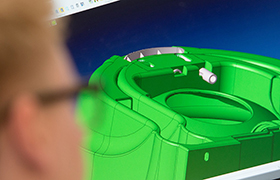
Design for manufacture can reduce the amount of polymer used without compromising function. Consistent wall sections, correctly designed ribs, for example, can improve filling and strength while avoiding excessive thickness. Part consolidation may also remove fixings, assembly stages or transport between suppliers. To optimise the manufacturing process, it’s always best to begin with design for manufacture support before committing to a mould tool.
Does injection moulding create waste?
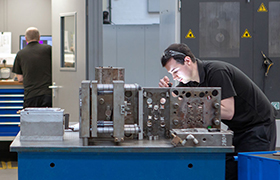
Sprues, runners, purging material, start-up parts and rejects can create waste. Hot-runner tooling, stable process control, preventive tool maintenance and appropriate reuse of clean regrind can reduce it. The correct approach will differ for each plastic part and depends on material and quality requirements; recycled process material should never be introduced without confirming that performance and compliance will be maintained.
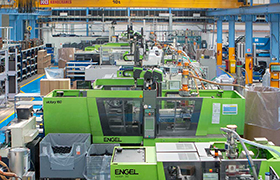
How do modern machines improve energy efficiency?
Claims should be specific and supportable. “Recyclable” does not mean a component will be recycled locally, and “recycled content” does not by itself prove a lower whole-life impact. The best decision considers material grade, recycled percentage where applicable, expected service life, manufacturing location and end-of-life route.
A practical route to a more sustainable moulding
Define the functional requirement first, compare suitable materials, remove avoidable mass, design for stable production, plan the tool for efficient cycles and confirm realistic end-of-life options. Rutland Plastics can coordinate these decisions through design for manufacturing advice, project management and plastic injection moulding services. For a project-specific assessment, speak to the Rutland Plastics team.
FAQs – Mould Tool Design and Product Quality
It can be resource-efficient, but the answer depends on material, energy, waste, product life, transport and end-of-life processes rather than the manufacturing process name alone.
Many thermoplastic parts can be mechanically recycled, although some additives, mixed materials, contamination, labels and local recycling infrastructure can affect practical recyclability.
It can use recycled polymer when the material is compatible with the component’s technical, appearance, regulatory and quality requirements.
There is no universal answer. The best material is the one that meets the required performance with appropriate sourcing, efficient processing, long service life and a realistic end-of-life route.
